“Will I Feel Sick After Eating?”
A meal should not become something you approach with anxiety, wondering how your stomach may react afterward.

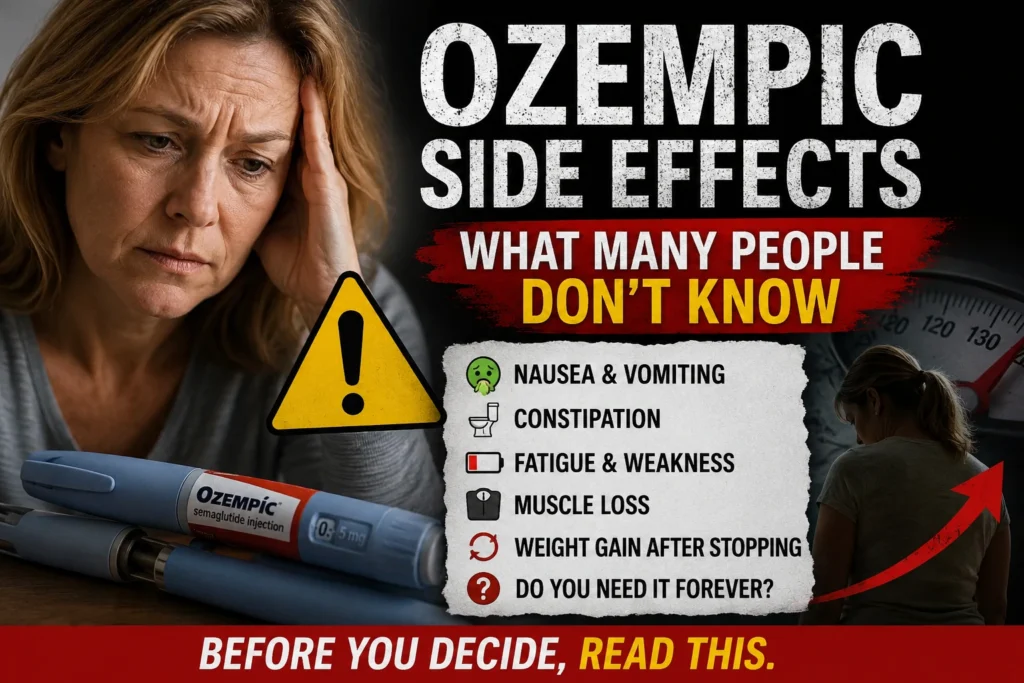
One injection. Less hunger. A smaller number on the scale.
After years of diets, restriction and starting over, it is easy to understand why Ozempic can feel like relief.
But once the excitement settles, a different set of questions often begins to surface.
What happens when the injections stop? Will the hunger, cravings and old struggle simply return?
Will I need to keep taking it indefinitely? And what happens if cost, availability or side effects make that impossible?
What if the side effects become part of everyday life? Nausea, constipation, fatigue and the fear of not feeling like yourself.
Is the injection changing the deeper struggle? Or is it only making the signals quieter while the medication remains active?
I do not want to spend the rest of my life depending on another temporary method just to feel in control of my body.
That does not mean Ozempic is the wrong choice for everyone.
It means you deserve to understand the full picture before deciding whether a weekly injection is the answer you truly want.
Discover a different perspective before relying on another temporary strategy.

If you read weight-loss forums for just a few minutes, you'll notice something surprising. Many of the conversations are no longer about losing weight... They're about what happens after.
"I finally lost the weight... but now I'm terrified of stopping."
"What if all the cravings come back?"
"I don't want to depend on weekly injections forever."
"I've worked so hard... what if I end up right back where I started?"
These questions are no longer about the medication itself. They're about something much deeper... Whether the body has actually changed.
That may explain why so many people begin searching for answers that go beyond injections, calorie counting and temporary solutions.
Instead of asking, "How do I lose more weight?" many eventually begin asking... "How do I keep it off?"
Discover Why Many People Are Looking Beyond Ozempic →See the free presentation before making your next decision.

It is easy to focus entirely on the number you hope to see on the scale. But the experience between injections matters too.
Imagine finally seeing the scale move—yet spending your morning wondering whether nausea will return, avoiding a meal because your stomach feels unsettled or changing plans because you have not felt like yourself.
The most commonly reported Ozempic reactions include nausea, vomiting, diarrhea, abdominal pain and constipation. Not everyone experiences them, and their severity can vary—but they are among the concerns many people want to understand before beginning treatment.
A meal should not become something you approach with anxiety, wondering how your stomach may react afterward.
Work, family dinners, travel and social plans can feel different when digestive discomfort becomes part of the calculation.
Some people are less concerned about the injection itself than about whether treatment may affect how they feel from day to day.
I want to lose weight—but I also want the energy and confidence to enjoy the life I am trying to improve.
Medication decisions are individual, and Ozempic can have important medical benefits for appropriate patients. But before making a decision, it may be worth exploring the larger picture of appetite, weight and long-term maintenance.
Watch the free presentation before relying on another temporary strategy.

Millions of people are asking whether Ozempic can help them lose weight. But there may be another question worth asking before the next injection.
Why does my body keep making weight feel so difficult to control in the first place?
Because if the deeper struggle remains unchanged, every new diet, every new injection and every new program may begin to feel like another temporary chapter.
Start with hope.
See temporary progress.
Worry about what happens next.
That is the perspective explored in the free presentation below. It does not tell you to begin, stop or replace a prescription treatment. It offers another way to think about appetite, weight and why familiar approaches may continue to feel temporary.
See what many people are learning before depending on another strategy they may need to continue indefinitely.
Watch the Free Presentation →A different perspective on long-term weight management.

Side effects are only part of the concern. Many people also want to know what happens during long-term use, what may happen after stopping and whether treatment fits the life they want to live.
The official prescribing information lists nausea, vomiting, diarrhea, abdominal pain and constipation among the most common adverse reactions reported with Ozempic.
Not everyone experiences the same effects, and their intensity may vary. The official label also contains warnings about less common but potentially serious risks that should be discussed with the prescribing healthcare professional.
Ozempic contains semaglutide, but it is approved for specific uses involving adults with type 2 diabetes and certain related risks. It is not the semaglutide brand approved specifically for chronic weight management.
Wegovy also contains semaglutide but has different FDA-approved indications and dosing. A prescription should only be used for the purpose and person determined by a qualified prescriber.
Individual experiences vary. Some people report that appetite, cravings or previous eating patterns become more noticeable after treatment is discontinued.
Maintaining progress may depend on several factors, including the reason the medication was prescribed, nutrition, activity, sleep, other health conditions and the long-term plan developed with the prescribing professional.
No outcome is guaranteed for every person. Research involving semaglutide for weight management has observed weight regain among many participants after treatment was withdrawn, but the amount and timing differed.
This is one reason why people often ask whether medication is being considered as part of a long-term plan rather than as a brief, stand-alone intervention.
There is no single duration that applies to everyone. The appropriate length of treatment depends on why it was prescribed, how the person responds, possible side effects, other medical conditions and the prescriber’s assessment.
Ozempic should not be stopped, restarted or changed without discussing the decision with the professional managing the prescription.
Yes. Digestive reactions are among the most commonly reported side effects. These can include nausea, vomiting, diarrhea, abdominal pain and constipation.
Persistent, severe or concerning symptoms should not be ignored. The prescribing professional can explain warning signs and determine whether treatment needs to be evaluated.
Experiences differ. Digestive discomfort, reduced food intake or other treatment-related changes may affect how some individuals feel during the day.
Weight on the scale is not the only consideration. Energy, strength, nutrition, comfort and the ability to participate in normal routines are also reasonable subjects to discuss before and during treatment.
No medication is appropriate for every person. Medical history, current conditions, other medications, potential benefits and known risks all matter.
Ozempic also carries contraindications and important warnings in its official prescribing information. A qualified healthcare professional should determine whether it is appropriate for an individual patient.
Long-term weight management may involve nutrition, movement, sleep, behavioral support, prescription treatment or a combination of approaches. The right strategy depends on the individual.
The free presentation on this page explores a different perspective on why weight may remain difficult to control. It is educational and is not a replacement for prescription guidance.
Explore a different perspective on why familiar weight-loss methods may continue to feel temporary—and what many people are trying to understand before relying on another long-term strategy.
Watch the Free Presentation →Educational presentation • Continue when you are ready
Explore the questions that often appear when people begin looking beyond short-term results and start thinking about long-term weight management.
OFFICIAL HEALTH INFORMATION
Review official prescribing and public-health resources for complete information about Ozempic, semaglutide, GLP-1 medications and long-term weight management.
Weight Insight is not affiliated with or endorsed by the FDA, MedlinePlus, NIDDK, Novo Nordisk or the organizations referenced above.